Rain had fallen on as he practised his austerities. His hair had become tangled and matted. In the forest, he stood so still that a pair of small birds began to build a nest in his locks.
They brought shreds of grass. knew what they were doing.
He felt compassion for them and let them make their home. He would not move in a way that injured them.
The rains ended and autumn came. The birds laid their eggs in the nest. They went out and came back, trusting the place on his head.
The eggs hatched. The young birds grew.
remained motionless, protecting them while they were small. When they gained wings, he felt pleasure at their growth.
At first they flew out in the evenings and returned without going far. Then they went out by themselves.
Later they stayed away through the day and came back at evening. Still he waited.
Sometimes they were gone five days and returned on the sixth. As they grew stronger, they stayed away for longer.
At last they did not return even after a month. Only then did leave that place.
He had cared for the birds until they could live without his shelter. Now pride entered his heart. After bathing, making offerings and honouring the rising sun, he proclaimed the merit he had won.
An unseen voice spoke. was not equal in righteousness to , who lived in . Even should not boast as he had done.
became angry. He wanted to meet this man.
He travelled in silence, stopping for the night wherever evening found him. After a long journey, he reached .
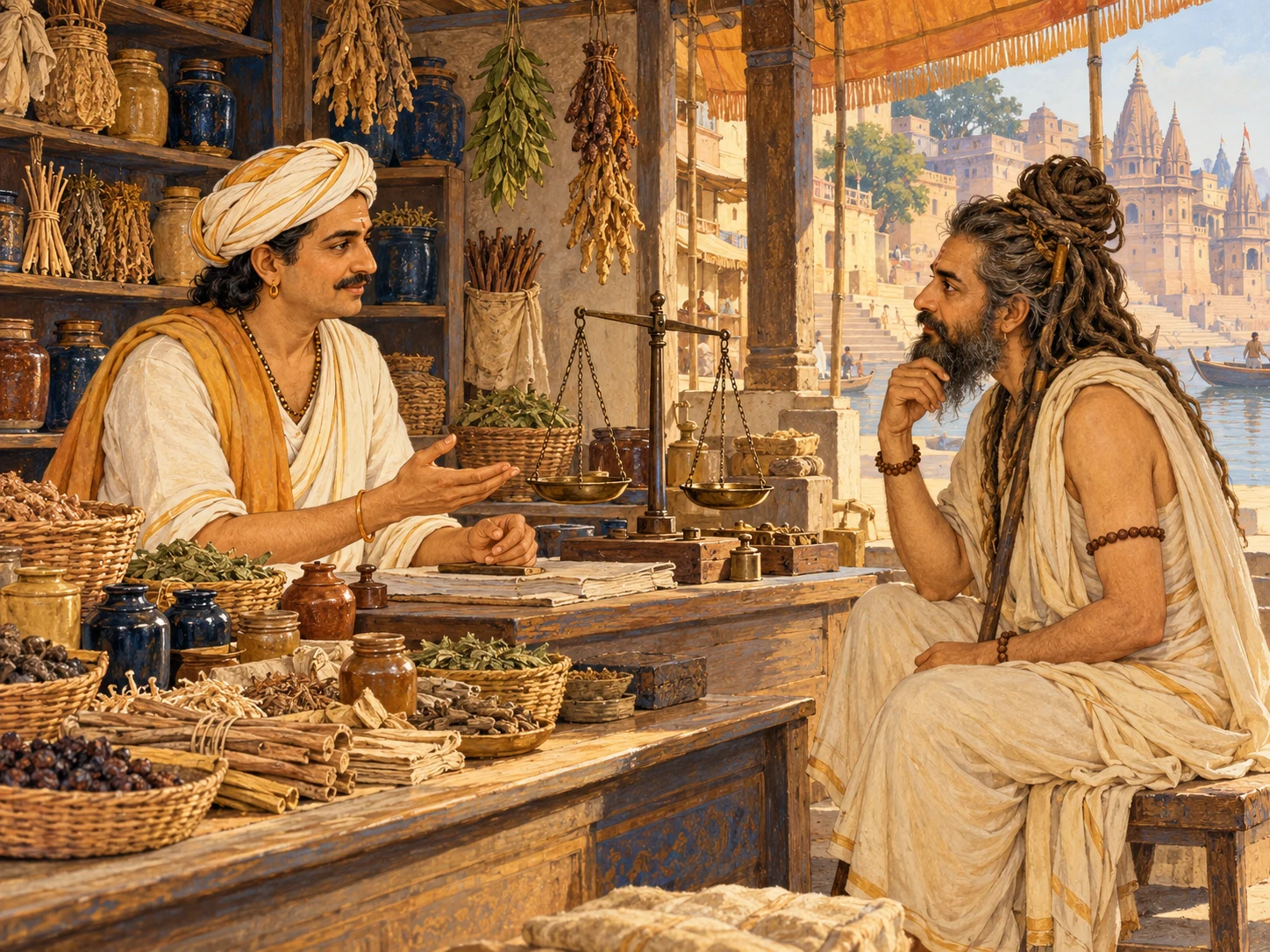
There was , selling goods in his shop.
The trader stood up cheerfully and welcomed his visitor with respect. He knew why had come.
He spoke of the penances, the nest, the young birds' flights, and the pride that followed. He knew about the voice and the anger too.
What can I do for you? he asked.
looked at the work before him. sold scents and liquids, roots and other things from plants.
How had someone occupied with buying and selling gained such steady knowledge? He asked the trader to explain.
answered with the way he lived.
He purchased goods from others and sold them without cheating. He did not sell wine.
His home was built of wood and grass cut by others. He lived within the ordinary work of the world.
The dharma he described was friendship toward all creatures, wishing their good. The best way of living caused no harm, or, where some harm was necessary, the least harm possible.
He did not seek quarrels. He did not hold hatred. He tried to regard all creatures equally.
My scales are even toward all beings, he told .
That evenness reached beyond weighing things for sale. It meant not tipping his regard toward one creature and away from another. Neither praise nor blame was to decide how he treated someone.
He spoke about fear. A person whose harsh words and anger frightened others lived in a world filled with fear. Giving creatures assurance that they need not fear you was a great gift.
He asked to consider creatures harmed in everyday work: animals bound and burdened, and people forced to labour under others' control. Familiar practices still needed thought about the pain they caused.
His care was to reach his thoughts, his words and his actions. He described dharma as subtle, with questions that were not easy to understand.
A practice needed to be considered with reason. Being handed down through generations did not by itself settle what pain it might cause another being.
slow down hereThe ascetic had come from a nest he had protected. The trader had brought their discussion to the lives around him, and to the care his own hands could take.