Full · 6 min aloud
The great battle was over.
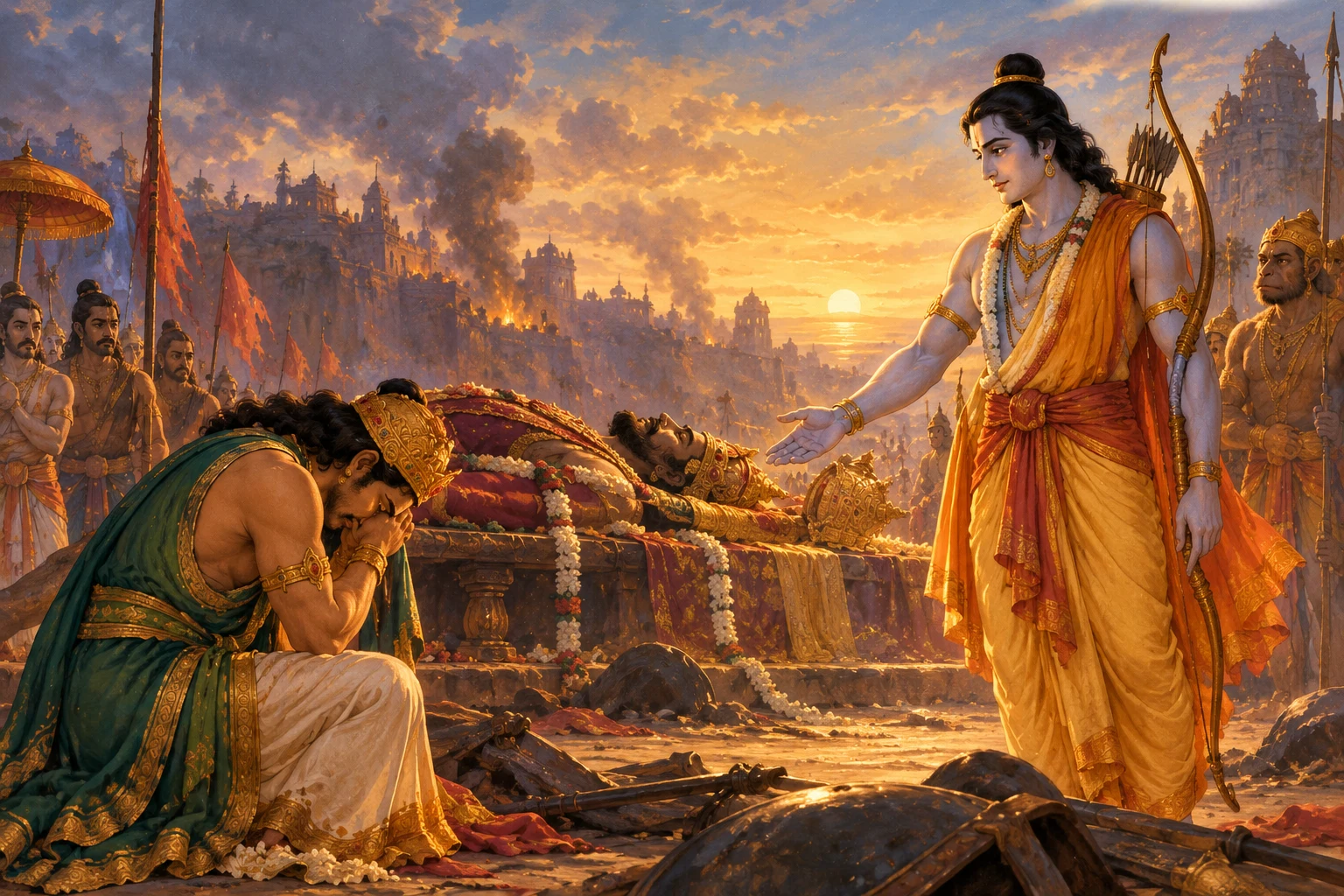
On the ground lay , king of . His shining crown had fallen from his head. His long arms, once so powerful, were motionless.
He had faced in battle. He had fought with all his strength. And now the mighty king would rise no more.
His younger brother, , came to him.
Vibhīṣaṇa had urged Rāvaṇa to return and end the conflict. Rāvaṇa had refused to listen. Finally Vibhīṣaṇa had left Laṅkā and joined Rāma.
He had stood against his brother because his brother was wrong. Now that brother lay before him.
Vibhīṣaṇa began to weep.
He had opposed his brother and left him. He had warned him about the very course that had brought him here. Yet he could not look at Rāvaṇa lying on the ground and remember only an enemy.
He looked at Rāvaṇa's fallen crown and the arms that had held mighty weapons.
You were a great warrior, he lamented. You were wise in the ways of kings. How have you come to lie upon the bare earth?
He remembered his warnings. Others had offered counsel too. But pride and desire had led Rāvaṇa away from what was right.
Yet Vibhīṣaṇa could not speak only of his faults. He remembered his brother's strength and greatness in battle.
His grief poured out in images: a great tree brought down by a storm, a mighty elephant fallen, a blazing fire extinguished.
Vibhīṣaṇa knew his brother had chosen wrongly. But knowing that did not make his grief disappear.
Rāma listened and spoke of Rāvaṇa's courage. This was no warrior who had abandoned the battle. He had fought fiercely until the end.
Victory and defeat belonged to a warrior's life. No one had always been victorious. Now Vibhīṣaṇa must think of the duty that remained.
Vibhīṣaṇa spoke again. His brother had given generously, provided for his servants and shared wealth with friends.
He had practised austerities, maintained sacred fires and studied the Vedas. These were part of the man Vibhīṣaṇa had known.
He asked Rāma for permission to perform his brother's funeral rites.
Rāma answered: Hostility ends with death. Our purpose has been accomplished. Let his funeral rites be performed.
He is as much mine as yours.
But the sorrow in Laṅkā was not finished. , Rāvaṇa's wife, came to mourn him. The other women mourned too.
Mandodarī remembered his immense power and the counsel he had refused. She spoke of his wrongful act in taking Sītā and the destruction it had brought. She loved her husband.
And she knew that his actions had brought this sorrow.
Rāma again urged Vibhīṣaṇa to perform the rites and comfort the grieving women.
This time Vibhīṣaṇa hesitated. He spoke of Rāvaṇa's cruelty, deceit and disregard for dharma. How could he honour someone who had committed such wrongs?
He called Rāvaṇa an enemy wearing the appearance of a brother.
Vibhīṣaṇa did not want to honour what Rāvaṇa had done. But neither could he escape the duty now before him. His brother had been wrong, and he was dead; both things were before Vibhīṣaṇa as he spoke to Rāma.
Rāma did not deny Rāvaṇa's wrongdoing. He acknowledged his acts against dharma, but also his courage in battle. Death had brought their enmity to its end.
Rāma repeated his instruction: the last rites must be performed.
Vibhīṣaṇa went into Laṅkā. He gathered priests, sacred fires and the materials for the funeral.
Sandalwood and fragrant wood were brought. Rāvaṇa's body was placed upon a decorated bier.
Vibhīṣaṇa led the procession. Sacred fires were carried before the body. The women followed, weeping.
At the funeral ground, the rites were performed. Vibhīṣaṇa made the final offerings, gave water mixed with sesame and bowed his head.
He comforted the grieving women and returned to Rāma.
The war had ended. Rāma laid aside his bow, his arrows and his armour.
slow down hereHe laid aside his anger too.
Short · 3 min aloud
stood beside his brother.
, the mighty king of , had fallen in battle against . His crown lay on the ground. His long arms were still.
Vibhīṣaṇa had warned him many times. He had begged Rāvaṇa to return and avoid this terrible war.
Rāvaṇa had refused.
At last Vibhīṣaṇa had left his brother and joined Rāma.
He knew his brother had been wrong.
But now, looking at Rāvaṇa, he wept.
He remembered the warrior his brother had been, the strength he had possessed, and the wisdom he had refused to use.
Rāma listened to him.
He reminded Vibhīṣaṇa that Rāvaṇa had fought bravely and that a duty remained to be performed.
Vibhīṣaṇa remembered that his brother had given generously, cared for his servants and studied the Vedas. Those things had not prevented his terrible choices. He asked permission to carry out the funeral rites.
Then Rāma spoke.
Hostility ends with death. Our purpose has been accomplished. Let his funeral rites be performed.
He is as much mine as yours.
Rāvaṇa's wife, , mourned him too. She remembered his power and the counsel he had refused. She spoke of the wrong he had done in taking Sītā.
Later, as the women of Laṅkā mourned, Vibhīṣaṇa hesitated again.
He remembered Rāvaṇa's cruelty, his deceit, and the suffering his actions had brought. How could such a man deserve honour?
Rāma did not pretend Rāvaṇa had been righteous.
But Rāvaṇa had died. The battle was finished.
His funeral rites must still be performed.
So Vibhīṣaṇa gathered the sacred fires, sandalwood, priests and funeral offerings.
He led the procession, performed the rites, offered water and sesame, and bowed to his brother.
Afterward he returned to Rāma.
And Rāma put away his bow, his arrows and his armour.
slow down hereHe put away his anger as well.