After the harvest, when the cut grain had been carried away, gathered what remained in the fields. There were fallen ears to pick up and loose grains to collect. That was how he lived at , with his wife and son.
He gathered a measure of grain over a fortnight. At the new moon and full moon, he made his offerings and welcomed guests. He ate what was left after the offerings and the visitors' meals.
His small supply did something remarkable. When a guest arrived, the food increased. The account tells of hundreds of learned brāhmaṇas being fed.
and other devas came to receive their portions at his offerings. served with a cheerful heart.
heard about this man and his vows. He came to , speaking harshly and asking for food. welcomed him, offered water for washing, and placed a meal before him.
The visitor ate it all. supplied more.
That too was eaten. Before leaving, the guest smeared leftovers on his own body.
When the next feeding occasion came, returned. Again he ate all that supplied.
The host had no meal himself. He went back to gathering the grains left in the fields.
This happened six times. Hunger did not turn angry.
Neither insult nor the loss of his food unsettled his mind. He continued his vow.
After the sixth visit, spoke differently. He praised for generosity and restraint. Hunger could drive patience away, he said.
Food sustained life. Giving up something earned through such effort was hard. Yet had done it without anger or deceit.
He declared that could go to heaven in his own body.
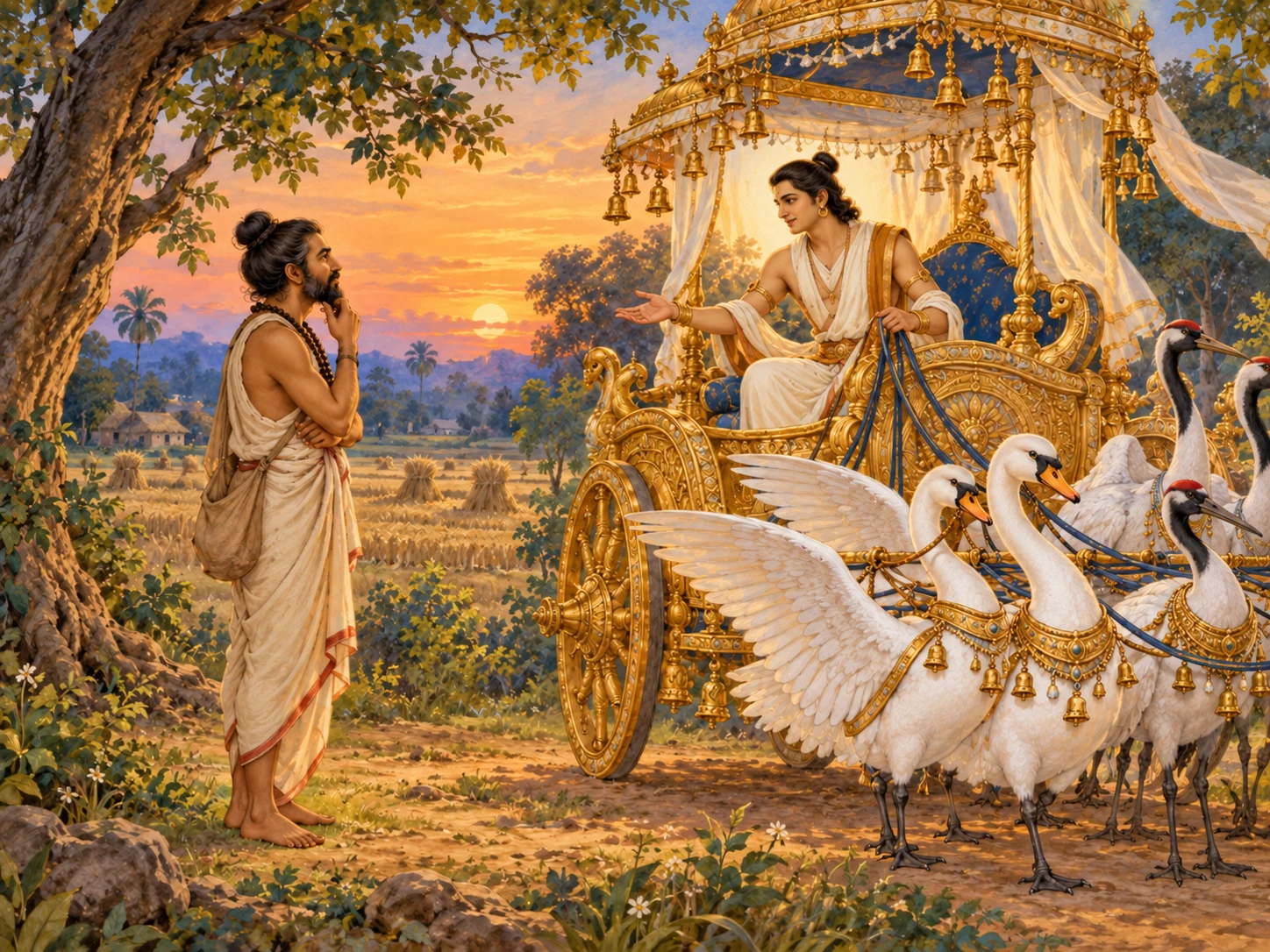
While he was speaking, a messenger of the devas appeared. He had brought a heavenly car, drawn by swans and cranes.
Bells decorated it. It carried a divine fragrance and could travel wherever it wished.
The messenger invited to ascend. This was the result his deeds had earned.
But did not enter. He asked about the place to which he was being invited.
What happiness is there? What do its people do?
And what disadvantages does it have? Tell me the truth, so I can decide.
He spoke of a friendship formed by walking seven steps together. In the name of that friendship, he asked the messenger to hold nothing back. Once he knew the whole account, he would choose his own course.
The messenger described bright worlds and beautiful gardens. There was no hunger, thirst or weariness.
Pleasant scents and sounds filled those regions. Those who had earned them lived there through the merit of their own deeds.
He described their shining forms, their fragrant garlands, and heavenly cars like the one waiting before . There were higher regions too, each with its own blessings.
Then the messenger came to the disadvantages.
In those worlds, people enjoyed the results of deeds already performed. They could not perform new deeds to add to that merit there. Once it was exhausted, their stay ended.
Before someone fell from heaven, the garland began to fade. Fear disturbed the person who had grown used to happiness.
Leaving a brighter place for a lower one brought regret. Enjoyment had not freed that person from another return.
thought carefully. Then he bowed to the messenger.
Go in peace. I do not desire this heaven. I want the place from which people do not return to sorrow.
The messenger spoke of the supreme abode of , pure and eternal. Attachment, pride, anger and envy did not lead there. Contemplation and self-restraint were part of that path.
said farewell. He continued gathering grain.
Praise and blame ceased to pull him in opposite directions. He practised meditation, gained knowledge, and attained liberation.
slow down hereThe beautiful car had come to take him away. One careful question had helped him choose where he wanted to go.