had said that there is a Self free from old age, death and sorrow. The gods heard his words. So did the asuras. Each wanted to understand the Self he had described. came from the gods, and came from the asuras.
They carried firewood, as students did when approaching a teacher, and lived with for thirty-two years.
When the years had passed, he asked why they had come. They repeated his teaching back to him: this was the Self they wanted to know. spoke of the person seen in the eye. His students asked whether the person visible in water or in a mirror was the same one.
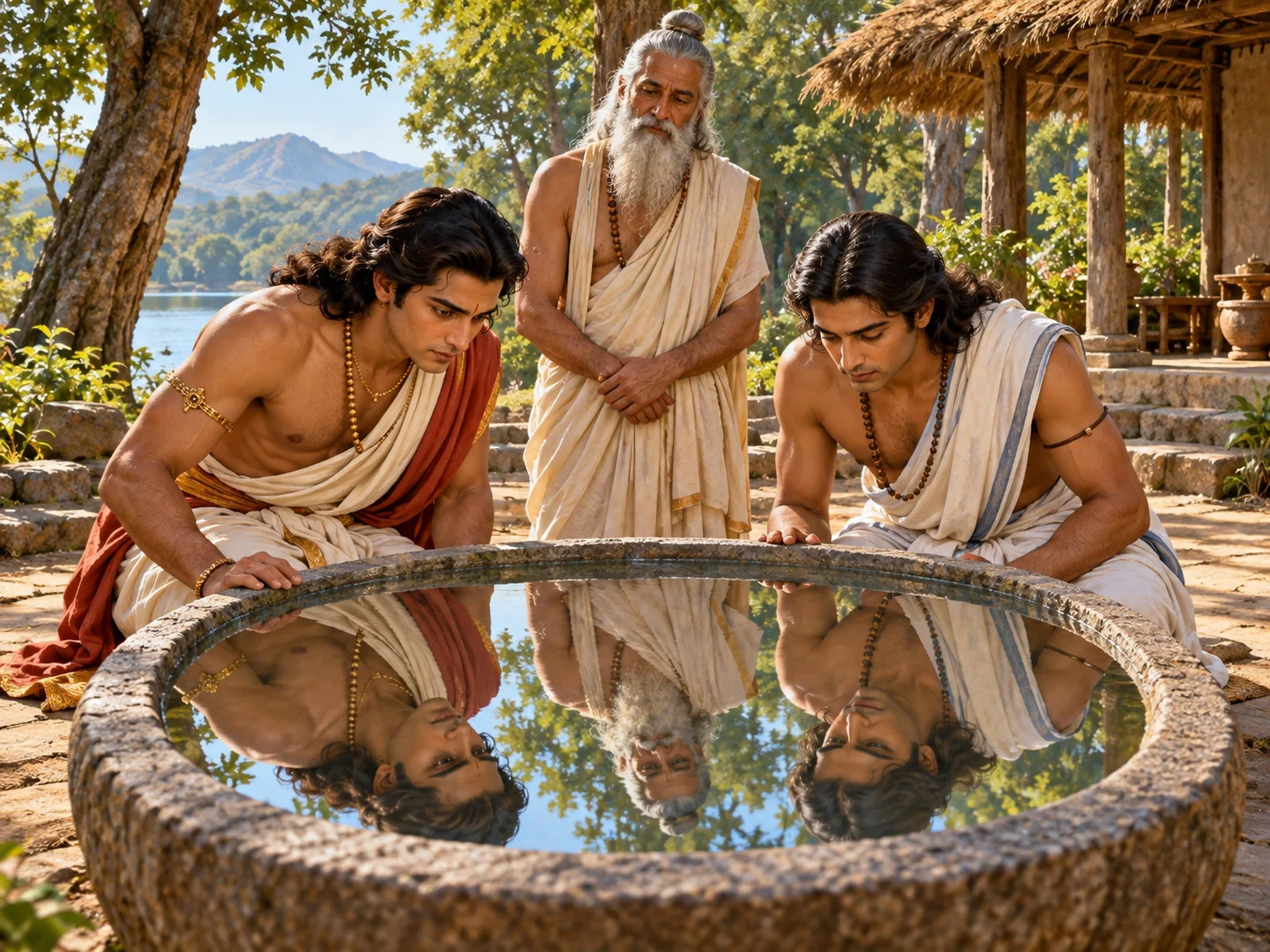
He told them that the same was seen in all of these, and asked them to look into a pan of water.
They looked. What could they see? Their own shapes, they said, even the hair and nails. told them to put on fine clothes and ornaments and look again. They did. The figures in the water wore fine clothes and ornaments too. That answer satisfied both students, and they left together.
But watched them go. Neither had understood the Self he meant. reached the asuras and taught that the body itself should be honored and served. did not reach the gods. On the way, he noticed a difficulty. The water showed whatever happened to the body. If the body changed, the reflection changed.
When the body died, the reflection would be gone. Was that the deathless Self they had come to learn about?
Carrying firewood again, returned. He told what troubled him. His teacher asked him to remain another thirty-two years. Then he offered a new answer: the one who moves about in dreams is the Self.
set out. Once more, he stopped before reaching the gods. A person in a dream could be chased. He might seem to be hurt, afraid or in tears. The dream did not answer his question about a fearless Self. Again he brought firewood to , and again he said why he had returned.
The teacher told him to stay for thirty-two more years.
After that long study, spoke of a person in deep, dreamless sleep. Here was complete rest, with no frightening dream at all. went away satisfied for a while. Yet another question came before he reached the gods.
In such sleep, the sleeper does not know, I am here. Nor does he know the beings around him. That sounded to almost like disappearance. How could he stop there?
He came back with firewood a third time. heard his concern and asked him to stay five more years. By then had studied with him for one hundred and one years. The teacher had not given him one easy sentence to carry home. At each stage, had found what the answer left unexplained.
Now spoke of the mortal body as the dwelling place of a deathless Self. While someone lives in a body, pleasure and pain reach that life.
The Self he was describing was not merely the figure in a pan of water, the frightened figure in a dream, or the blankness had worried about in sleep. spoke of wind and cloud, which can appear in their own forms when they rise into the light.
He said the Self too appears in its own form.
slow down here had taken the first reflection home as a finished answer. had looked again, then asked again. The water, the dream and the deep sleep had each shown him something, but none had ended his search. His teacher's final words came after all those returns. They were not the first answer heard beside the pan of water. The long years matter in this telling because did not call a question settled just because he had already spent years trying to answer it.