had studied deeply. He knew the Vedas and spent his days learning and reciting. Once he sat beneath a tree with the words on his lips. A female crane perched above him and soiled his body. looked up in anger. His angry gaze struck the bird, and she fell from the tree, dead.
He regretted what his anger had done.
When went to a village to ask for food, a woman at one house told him to wait. She was preparing to give him alms, but her husband came home hungry and tired. She gave her husband water, a seat and food. Only then did she remember the visitor standing outside.
She brought the food to , ashamed that she had made him wait.
was angry. He spoke of the respect due to a brāhmaṇa. The woman asked him to let go of that anger. She knew about the crane beneath the tree, though she had not been there. She spoke of truth, forgiveness and control of anger as marks of a wise person.
She urged him to seek a man in who could speak about dharma, the difficult question of how to act well. The man was a seller of meat.
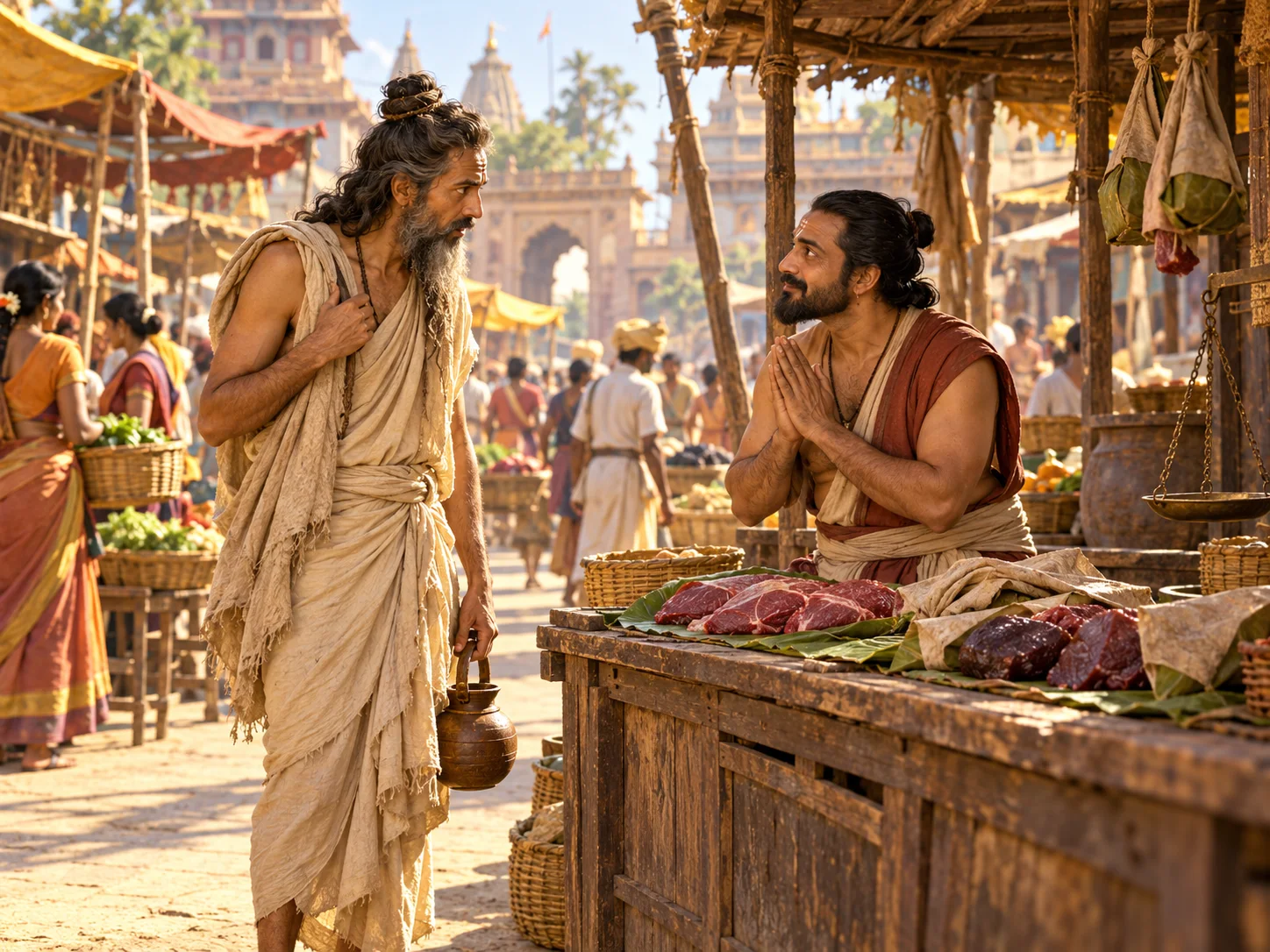
listened. He had already regretted the crane's death. Now he set out for , passing through forests, villages and towns. When he reached the city, he asked where to find the teacher. The answer led him to a butcher's yard. There the man sold meat to a crowd of buyers.
stood back from the busy place. The seller noticed him, went to him and greeted him respectfully. He even knew why the visitor had come. They walked together to the man's home, where he gave a seat and water.
At last could ask the question that troubled him. How could this man speak so well of right conduct while selling meat? The seller did not pretend to have another trade. He said that this work had come down through his family.
He described the way he tried to live: speaking truthfully, giving within his means, serving guests and dependants, and not answering wrong with wrong. He sold meat brought by others, he said; he did not slaughter the animals himself. None of this made the work disappear from the story.
It was part of what had to listen to while he weighed the man's words.
Their conversation went on. The seller spoke about actions that can harm and actions that can heal. He spoke of restraining anger, the very thing that had failed to do beneath the tree and at the woman's door. listened to a person he might have passed by without asking his name.
The man who had been busy with customers was giving his guest time and patient answers.
Then the seller said that should meet his father and mother. In an inner room, the aged couple sat after their meal. Their son bowed at their feet. They greeted him with affection and spoke of how steadily he cared for them. asked after their health.
The seller explained that he helped them bathe, washed their feet and fed them with his own hands. This was not a lesson he had kept only in words. The people who received his care were sitting before .
slow down hereThe seller now turned the question towards his visitor. had left his own parents to pursue learning without their permission. The seller said they grieved deeply in his absence and urged him to go home and console them. He asked him to return home that very day, without delay. did not answer with another angry speech. He thanked the man and accepted his counsel. He had crossed forests and towns to ask a stranger about dharma. The answer pointed towards a duty he had left behind.